
The Fresh Edit
The Fresh Edit project began well before the move. With a custom home on the horizon, our client chose to begin early—creating clarity within their current home through a full home declutter and organization process, rather than waiting for timelines to compress and decisions to feel rushed.

The Process
This work unfolded with a team of five, traveling together and fully immersed in the project from start to finish.
With Vanna packed and the road ahead, the focus shifted entirely to the home—creating the kind of uninterrupted time and attention that allows for deeper, more thoughtful work. There’s a rhythm that comes with that level of focus, where each decision builds on the next and the work moves forward with clarity.
The home was approached as a whole, not in parts. Every space, every category, and every layer was considered in relation to how the home is actually lived in—allowing the process to go beyond surface-level organization and into something far more foundational.


THE EDIT
Everything was brought into view—removed from drawers, cabinets, and storage so it could be seen clearly and considered with intention. From there, decisions became more straightforward. What is used. What is no longer needed. What feels aligned with where life is going next. As items were edited out, the home began to shift. Less visual noise. Less excess. More space to move, to think, to live.
THE RESET
Everything was brought into view—removed from drawers, cabinets, and storage so it could be seen clearly and considered with intention. From there, decisions became more straightforward. What is used. What is no longer needed. What feels aligned with where life is going next. As items were edited out, the home began to shift. Less visual noise. Less excess. More space to move, to think, to live.
THE SHIFT
The most meaningful change isn’t just what’s visible.
There’s a clarity that comes from this process—a better understanding of what is truly used, what is needed, and what deserves to move forward. That awareness carries beyond the current space, shaping decisions for the home that is still to come.
WHAT'S NEXT
When it is time to move, this home is already prepared. There is nothing left to sort through under pressure, no decisions waiting to be made at the last minute. What remains has already been chosen, with intention and clarity. And that is where a seamless transition begins.

KITCHEN ORGANIZATION
The kitchen became one of the most transformative spaces in the home, not through what was added, but through what was thoughtfully removed and redefined. A significant edit took place here—paring back duplicates, excess, and items that no longer served a purpose—creating the space needed to approach the layout with clarity.

.jpg)

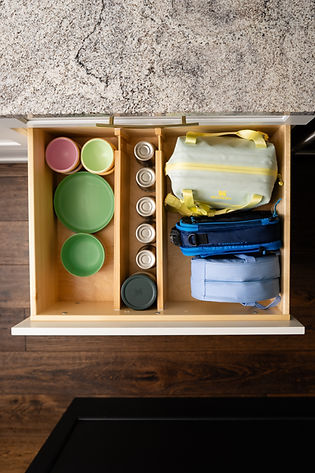
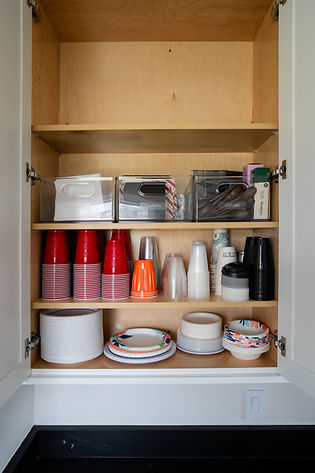
From there, the focus shifted to function. Food was relocated from a secondary pantry in the laundry room into the kitchen itself, using the cabinetry flanking the refrigerator to create a more intuitive and accessible pantry system. At the same time, the existing drink zone was removed and reestablished in the adjacent utility space, allowing the kitchen to function more seamlessly around daily use and flow.
With the foundation reset, each cabinet was fully cleared and cleaned before being rebuilt with cohesive, intentionally selected organizing products. Natural materials, including bamboo, were used throughout—bringing a sense of warmth and consistency while supporting the overall design of the home. The result is a kitchen that feels lighter, more efficient, and aligned with how the space is actually used.


ARTS + CRAFTS AND GAME ORGANIZATION
This area required a complete reset, not because of volume alone, but because of how dispersed everything had become throughout the home. Arts and crafts, games, and puzzles were spread across multiple spaces—upstairs, on the main level, and tucked into different areas without a clear system. Bringing everything together created an immediate shift, allowing each category to be fully seen, sorted, and thoughtfully edited. Items that had been outgrown, incomplete, or no longer used were removed, making space for what still holds value in this season.
.jpg)
.jpg)
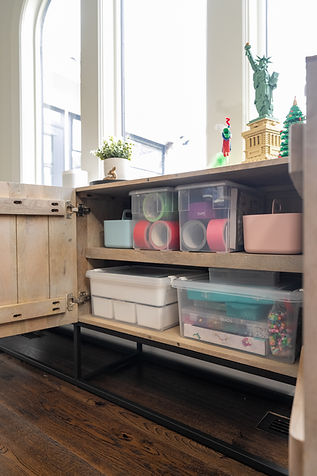
From there, new zones began to take shape. A dedicated craft area was created just off the dining space, using a nearby buffet to house the most frequently used supplies—markers, crayons, and everyday materials that can be easily accessed and put away. This allows for a more natural rhythm, where creativity can happen without needing to search or reset the space each time.
Just beyond that, a centralized zone was established for games, puzzles, and craft kits. Legos, card games, and hands-on activities were grouped together using cohesive, stackable containers—each category contained in a way that feels both structured and easy to maintain. Smaller items were thoughtfully organized so they can be grabbed quickly, used fully, and returned just as easily.
What was once scattered now feels connected—creating a system that supports both independence and ease, while still aligning with the overall aesthetic of the home.


PRIMARY SUITE
The primary suite was approached with a slightly different lens—less about perfecting every detail for today, and more about creating clarity for what comes next. A full edit took place across the bedroom, both closets, the bathroom, and the linen storage. Each space was thoughtfully pared back, allowing only what is truly worn, used, and loved to remain. With a new home on the horizon, this step becomes essential—not just for the sake of organization, but to inform how future spaces should be designed.
In the primary closet, the focus shifted toward creating space and visibility rather than over-defining the system. Items were grouped and refined, with select pieces given room to breathe through simple, intentional displays. The goal wasn’t to finalize the space, but to better understand it—what is needed, what is not, and how it should ultimately function in a more permanent setting.


Within the bathroom, everyday items were streamlined and contained using clean, cohesive solutions that support daily routines without adding visual weight. Hair tools, products, and personal items were organized in a way that feels both accessible and easy to maintain, allowing the space to function quietly in the background of daily life.

.jpg)

Across the entire suite, the shift was subtle but impactful—less excess, more intention, and a clearer foundation for what will be carried forward.


STUDY + GIFT WRAPPING STATION
Smaller spaces often carry the most friction, which is why they were approached with the same level of intention as the rest of the home.
In the primary closet, the focus shifted toward creating space and visibility rather than over-defining the system. Items were grouped and refined, with select pieces given room to breathe through simple, intentional displays. The goal wasn’t to finalize the space, but to better understand it—what is needed, what is not, and how it should ultimately function in a more permanent setting.


In the study, a narrow desk drawer became an opportunity to create clarity in a space that typically collects excess. Thoughtfully selected inserts were used to establish defined zones for everyday supplies—allowing each item to have a place while maintaining a clean, unobtrusive look within a limited footprint. The result is simple, but highly functional, supporting focus rather than distraction.
Elsewhere, gift wrap had accumulated across multiple areas of the home, making it difficult to access and even harder to maintain. Bringing everything together allowed for a complete edit before establishing a dedicated wrapping station behind an under-stair door. Vertical storage created a natural home for rolls, ribbons, and supplies—transforming what was once scattered into something contained, accessible, and ready to use at a moment’s notice.
These spaces may be smaller in scale, but they play an important role in how a home functions day to day—quietly supporting the moments in between.


CHILDREN'S SUITES
The children’s spaces were approached with both structure and flexibility in mind—creating systems that feel easy to maintain now, while allowing room to grow alongside them.
A full edit took place across both bedrooms, closets, and shared spaces, bringing together items that had been dispersed throughout the home and refining each category down to what is currently worn, used, and enjoyed. From there, the focus shifted toward creating clear, intuitive zones within each closet—separating school uniforms from everyday wear and making it easier to move through daily routines without friction.
In both closets, a simple but impactful system was introduced: a designated “too small” bin. As items are outgrown, they can be placed directly into this space, allowing for an ongoing, effortless edit without the need to revisit the entire closet each time. Once full, the bin can be cleared and donated, creating a rhythm that supports consistency over time.


.jpg)

Within her closet, select pieces were given space to be seen—reflecting a growing interest in personal style and allowing the space to feel both functional and expressive. In his, accessories such as hats, shoes, and sunglasses were thoughtfully displayed and contained, giving structure to items that are often difficult to keep organized.
Her bedroom was also refined to support how she naturally spends her time, with a dedicated desk area designed for drawing, journaling, and creative work. Simple drawer organization allows supplies to be easily accessed and just as easily put away, supporting independence without adding complexity.
Together, these spaces now feel calm, considered, and aligned with the way they live day to day—while quietly supporting the transitions still to come.


PLAYROOM
The playroom was approached with simplicity in mind. Rather than over-designing the space, the focus remained on editing—bringing all toys into one central area, removing what was no longer used or outgrown, and creating a more intentional collection of what remains. With everything visible and consolidated, the space naturally began to feel more manageable and easier to maintain.

Existing storage was thoughtfully repurposed, allowing the system to work without introducing unnecessary layers. Within the cubbies, subtle structure was added through the use of interior dividers—creating separation within each bin so smaller items don’t become lost or overfilled. The result is a system that still feels flexible, but with just enough guidance to support consistency over time.
It’s a quieter transformation, but one that makes everyday use feel significantly easier.


GARAGE
The garage was approached with both function and future plans in mind. As a multi-use space—serving as storage, a home gym, and an extension of daily life—it required a system that could support a wide range of items without becoming overwhelming. The first step, as with the rest of the home, was a thorough edit—removing what no longer served a purpose and creating space to work more intentionally.
From there, the focus shifted to creating clear, accessible zones. Tools, household supplies, and children’s items were grouped and contained in a way that allows everything to be easily found and just as easily put away. Simple, durable products were used to introduce structure, while maintaining flexibility for how the space continues to evolve.


While this is not the final iteration of the garage, it creates a strong foundation. With plans for a custom slat wall system in the future home, the solutions implemented here were selected with longevity in mind—ensuring that what was introduced now can transition seamlessly into what comes next.
It’s a practical space, thoughtfully considered—supporting everyday use while staying aligned with the larger vision for the home.



What began as a full-home reset ultimately became something more. By starting early, this family was able to move through the process with clarity—making thoughtful decisions without pressure, and creating space for what truly matters in the next chapter. The home now reflects how they live today, while quietly preparing them for what’s ahead. And when the time comes to move, the foundation is already in place.
This full home declutter and organization project in Fort Wayne, Indiana was completed in preparation for a future custom home build—creating a strong foundation for a seamless move when the time comes.
This is where a seamless transition begins.
This Fort Wayne home organization project highlights a full home declutter, kitchen organization, kids closet systems, and garage organization designed to support a future move.
Home Organization Services in Fort Wayne, Indiana